Humanitarian aid is coming under increasing pressure due to the dismantling of USAID, drastic budget cuts by traditional donors and the global rise of populist forces. The resulting disruptive change in the humanitarian system and its actors also opens up scope for change. As a humanitarian think tank, CHA is accompanying this upheaval from a policy- and practice-oriented perspective – and contributing new ideas and impetus.
The conceptual framework for this is ‘contestation’, which describes an ongoing debate on dominant ideas, institutions and practices and captures how different actors either defend or challenge existing normative orders. We apply this perspective to the humanitarian sector and consider actor-driven transformations, institutional shifts and normative realignments. Contestation is the leitmotif and cross-cutting theme of the 2025-2027 work plan, which focuses on three interrelated priority areas under the mega-theme of ‘Contested Aid’: power shifts, politicisation and prioritisation.
We want to find answers to the following questions:
- Aid antagonists: How do humanitarian actors position themselves in the face of populist public and political attacks that delegitimise international aid? Are antagonistic changes in donor countries accompanied by growing competition or new dynamics of cooperation among humanitarian actors? Which strategies for collective action prove to be sustainable – and what significance do collaborative leadership approaches have in this context?
- Donor Accountability: How can an adequate humanitarian engagement by donor governments be defined and justified? What are possible approaches for evidence-based ‘fair share’ models for public humanitarian budgets? What are the criteria and models for prioritisation processes in times of declining resources based on humanitarian principles versus geopolitical priorities?
- Towards local leadership: To what extent do intermediate financing mechanisms such as pooled funds enable and anchor local leadership? What can or should local leadership look like in such mechanisms? What implications do intermediary mechanisms which aim to structurally embed local leadership have for the broader humanitarian sector/system? Do they contribute to the transformation of the system or to its fragmentation?
Contact: Sonja Hövelmann, Ralf Südhoff & Goda Milašiūtė
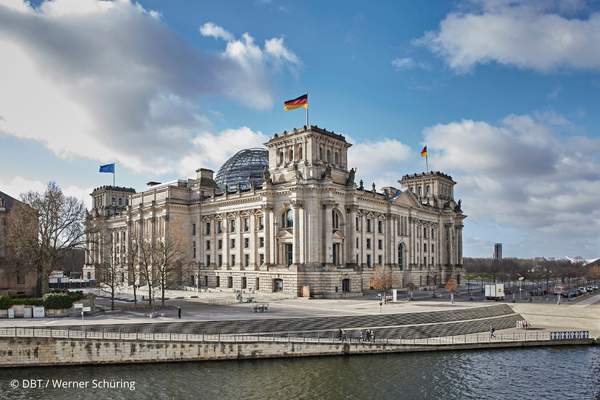
CHA at parliamentary subcommittee meeting on the role of the United Nations in the Middle East conflict
14.09.2026CHA Director Ralf Südhoff has been invited as an expert to a subcommittee meeting on Global Order, the United Nations, and International Organisations of the Foreign Affairs Committee in the German Bundestag.

CHA director Ralf Südhoff on DGVN podcast
01.06.2026CHA director Ralf Südhoff speaks on the implications of the ‘UN80’ initiative on humanitarian action on the DGVN podcast.

CHAtroom #27: Contested Aid with Goda Milašiūtė
29.05.2026As a result of drastic cuts to humanitarian action worldwide and the ‘Humanitarian Reset’, pooled funds are playing an increasingly important role – why? In this CHAtroom episode we ask CHA Research Fellow Goda Milašiūtė.

Ralf Südhoff on Bemerkenswert Podcast
26.03.2026CHA Director Ralf Südhoff was invited on the Bemerkenswert Podcast and exchanged views with Silke Otto on the humanitarian principle of humanity.

CHA at the Humanitarian Congress 2026
16.03.2026“Humanitarianism(s) in Transition: Between Ideals, Power and Agency” is the theme of this year’s Humanitarian Congress, which will take place in Berlin on April 21 and 22, 2026. The CHA will be represented on one panel and with a stand.

CHAtroom #26: Contested Aid with Sonja Hövelmann
06.03.2026CHA Research Lead Sonja Hövelmann is our guest in the CHAtroom and explains how CHA, as a humanitarian think tank, intends to help navigate the shifts and challenges in the humanitarian sector. [German]

Out of the Box: Pooled Funds - Breakthrough or Bottleneck?
04.03.2026 15:00 - 16:15Pooled funds are both the new hope and the latest buzzword for humanitarian action, which has been in crisis since 2025. But what exactly are pooled funds, and what are the pros and cons of the various UN, INGO or locally managed approaches?

CHA Conference 2026
25.11.2026 00:00 - 23:59This year's CHA Conference will take place on 25 and 26 November 2026 at Publix in Berlin Neukölln.
Out of the box on MSC 2026: The New German security policy – Military? Interlinked? Humanitarian?
10.02.2026 13:00 - 14:15In this ‘Out of the Box’ event we discuss with actors from the Bundeswehr and security policy research, civil society, politics and aid organisations the future of German security policy.

CHAtroom #25: Contested Aid with Jan Egeland
12.12.2025In this new episode of our series on „Contested Aid” Ralf Südhoff asks Jan Egeland, NRC Secretary General: Are we really entering a new era of contested aid – or are we just seeing a little more of the same?
The fading of the Humanitarian Reset
16.10.2025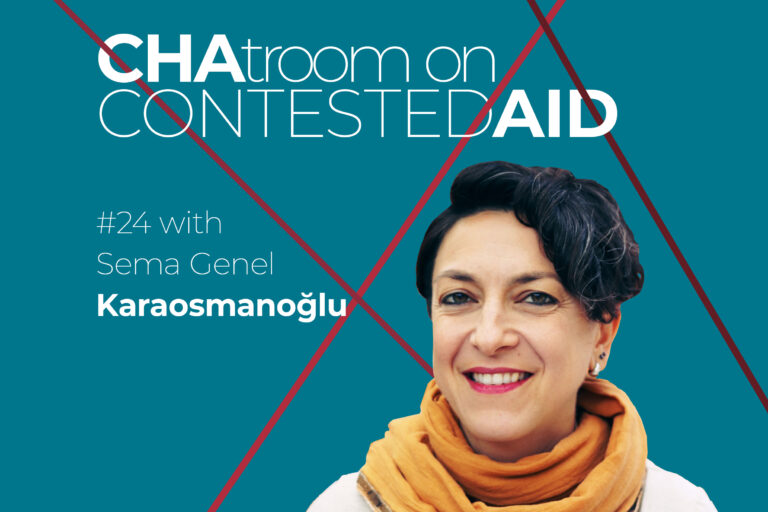
CHAtroom #24: Contested Aid with Sema Genel Karaosmanoğlu
19.09.2025Dr Sema Karaosmanoğlu is the first guest in our new series of episodes on “Contested Aid”. Ralf Südhoff talks with her about the Humanitarian Reset process and the opportunities, but also possible limitations of a truly locally led system.
#CHA25 Conference Review
04.07.2025From 25.06.2025 – 26.06.2025, the CHA dedicated its annual conference to the topic “Contested Aid – Power Shifts, Politicisation and Prioritisation”. Here you can find all session videos of day 1.