| Author: | Larissa Fast, Birte Vogel, Jessica Field |
| Date: | 1. July 2026 |
Localisation and decolonisation debates continue to expose systemic inequalities in conflict and disaster (C&D) research. Our project – Re-ordering ethics and knowledge production in C&D-affected contexts – interrogated how the processes and politics of data collection and knowledge production shape what is known about C&D settings, and whose knowledge is valued. Working across three C&D contexts – Nepal, Colombia and the Balkans – we uncovered widespread dissatisfaction among local researchers* around how external research institutions value and acknowledge their knowledge contributions. This represents a knowledge production concern distinct from the procedural ethics of research partnerships.
Our project and previous research collaborations highlight how local researchers fundamentally shape the intellectual journey of a project. In partnership with INGOs, external universities and think tanks, they variously: shape research agendas; select, collect and analyse data using contextual expertise and sensitivity; interpretively translate content; and report findings that build on their distinct knowledge base as well as the project rubric. Their labour, networks and intellectual judgments directly and indirectly shape outputs. Conversely, where local researcher knowledge operates in tension with external researcher interpretations and is deprioritised, that tension can be generative to the knowledge production of the project, too. Both instances – of contribution and tension – should engender recognition, engagement and credit. However, C&D research project frameworks continue to have a local researcher knowledge production blindspot.
More than data gatherers
In our study, local C&D researchers frequently reported a lack of meaningful acknowledgement for their labour and knowledge contributions. They shared countless occasions when they only received a ‘thank you’ at the end of a report. Or worse, they were not acknowledged in the final output at all, even though, as one Nepal-based interviewee shared: ‘they [the global Northern researcher] got the context, data, interviews all because [of me]’. One participant in the Balkans talked about the ‘colonising [of] facts’ that they experienced with external researchers (re)interpreting data from their external understanding of the context, overlooking ‘nitty-gritty’ dynamics that come from local embeddedness or local researcher expertise. Dunia et al (in their 2023 book Facilitating Researchers in Insecure Zones) refer to this role as an ‘indispensible bridge’, emphasising that the research would ‘be impossible’ without local actors.
These concerns appeared across our three study contexts and reflect a twofold problem. First, inconsistencies in how ethics frameworks in C&D research are considered, or not, shape knowledge production. Large organisations – particularly in the global North – typically have ethics procedures. However, these processes tend to centre on the risks, wellbeing and aspirations of research participants rather than researchers themselves. Organisations also commonly lack ethics protocols entirely for operationally-linked activities (such as monitoring and evaluation, needs assessments, or accountability and learning) that would be considered research in academic settings.
Even when guidelines do exist, for example, Oxfam’s 2020 Research Ethics: A Practical Guide, they tend to take a risk-based approach or emphasise procedural elements of ‘co-production’ – overlooking the ethics around knowledge creation itself. Academic research ethics are also frequently treated as a box-ticking exercise. As a Balkans-based participant shared: ‘In the last project they had an ethics committee which never met during the project. Not a single time. So, it is only about the form, not about the substance. No one really cares once you get the [ethics] approval’.
Moreover, knowledge production is dynamic across the lifetime of the project, and local researchers are specialists in their own right, with expertise that shapes outputs and with aspirations tied to research recognition. This too is an ethics issue. For example, local researchers may represent the ‘face’ of the research in the eyes of the local community, shaping the data and creating an accountability burden that is not reflected in the public journey of research outputs. Many are motivated to explore the knowledge gaps around them and can hold global research career ambitions of their own. Some might have a personal aspiration to ‘give back’ to their crisis-affected community through formally contributing to knowledge production. Others are motivated by improved salary prospects, where remittances are lifelines. Or a combination of all of the above.
Current research hierarchies are not consistently or reliably fostering those research-centred opportunities – to the exclusion of local researchers. A participant in our Balkans workshop mentioned feeling caught between being ‘too academic’ for policymakers and ‘too practical’ for academia; in essence, discounted by both. Such a status quo is also to the detriment of research quality and its ability to improve outcomes for crisis-affected populations.
Centring the costs of knowledge exclusion reveals why risk-focused ethics frameworks (where they exist at all) are ill-equipped to deal with the diversity of harms that can be produced by knowledge projects. Without critical reflection, these frameworks can also naturalise knowledge hierarchies and reproduce colonial patterns of knowledge extraction under the guise of partnership.
Second, it’s not just in knowledge production where exclusion effects are felt. Financial governance, too, is often treated only as an administrative or compliance responsibility rather than a core equity concern. Control over finances shapes power in institutional collaborations and therefore both what knowledge is produced and how it is resourced. In our research, local project partners frequently reported having little insight into overall budgets, limited influence over spending priorities, and no role in last-minute decisions about reallocating surpluses or making cuts at the end of a project.
Addressing these gaps requires a recognition of local researchers as knowledgeable stakeholders as well providers of a service.
Moving beyond ethics-as-risk
We recommend three steps external research organisations – e.g. INGOs, think tanks and external universities – should take before a project begins in order to rebalance power within research partnerships:
- Delink risk and ethics and approach research ethics as an ongoing process of collaborative reflection. Frameworks and procedures can be useful guardrails, but they must offer more than a one-time bureaucratic assessment exercise. Ethics discussions should happen throughout the research cycle, not just at the proposal stage. Humanitarian Policy Group research from 2019 on localisation and 2025 on partnerships called for a ‘conscious effort’ to include and listen. This should be taken a step further, with regular ethics engagement that is established and timetabled at the outset to ensure ongoing accountability.
- Whenever possible, co-design with local researchers as well as crisis-affected communities to increase relevance and minimise misunderstandings about the research and its purpose.
It is important to discuss and, ideally, agree in advance: guidelines, team functioning, project implementation (e.g. data gathering, sharing, and eventual destruction), and how local expertise will shape outputs. Meaningful collaboration also requires transparent budgets, inclusive financial decision-making, and resourcing for partners’ institutional capacity. These changes require the proactive creation of meaningful listening space for local researcher inputs. As Lokot and Wake write: ‘co-producing research in humanitarian settings requires academics and practitioners to shift from their roles as experts and implementers to collaborators who value experiential as well as academic knowledge’. - Collaboratively discuss and agree on clear guidelines and expectations around authorship and acknowledgements at the beginning of a project – and keep dialogues ‘open’.
Equality is not always possible or desireable, but transparency and accountability are. Transparency means acknowledging that projects are messy, can take unintended pathways, raise unexpected ethical dilemmas, and require compromise above an ‘ethical optimum’. All parties should clearly discuss expectations around authorship and acknowledgement at the outset, and not as an afterthought. Remaining open to revisiting the guidelines and expectations at every stage of the research process will help maintain accountability.
Whenever possible, external research organisations should foster longer-term research engagements that can build on and strengthen established relationships and trust, and help to support the professional development and aspirations of often precariously-employed local researchers. This ethics-centred approach to research, in line with the ‘humanitarian reset’ ambitions, offers a practical pathway to operationalise localisation and decolonisation in producing research and knowledge about and with C&D communities.
________________________________________________________________________
For a full overview of the project and the full list of recommendations, see this policy brief: The Ethics of Research Collaborations in Conflict and Disaster Settings.
* ‘Local researcher’ is a contested term with problematic assumptions about a researcher’s ‘place’ in the global research order. For this article, we deploy ‘local researcher’ broadly to capture a researcher based in the geographical area of study with whom external organisations partner due to their expertise and contextual insights, as well as their physical locality.
Authors
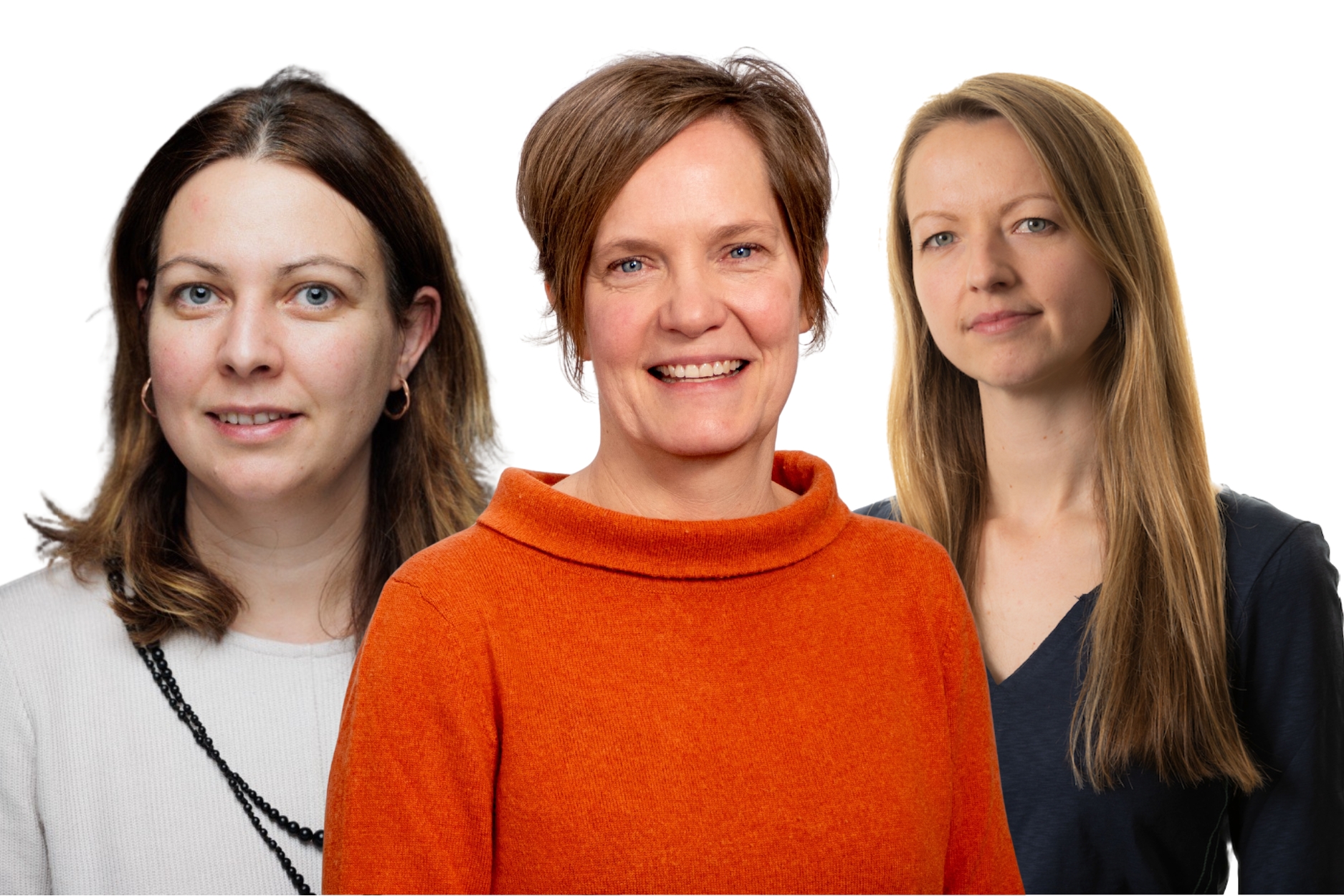
- Professor Larissa Fast, Professor of Humanitarian and Conflict Studies at the Humanitarian and Conflict Response Institute (HCRI), University of Manchester. She was co-I of the British Academy funded project, Re-ordering Ethics and Knowledge Production in Conflict and Disaster-Affected Contexts
- Dr Birte Vogel, Senior Lecturer in Humanitarianism, Peace and Conflict Studies and Deputy Director of HCRI. She was the PI of the Re-ordering Ethics project
- Dr Jessica Field, Research Associate at HCRI. She was a steering group member for the Re-Ordering Ethics project
Related posts
Localisation
The End of Soft Power Superpower Germany
18.06.2026Berlin 2026: A Turning Point for Sudan – or Another Deferred Hope?
21.04.2026